I find it amusing what I’ve saved over the years. One such treasure is an old advertising brochure for the VIC 20, featuring a young William Shatner. Surprisingly, I located it on only my second place I looked. It’s a perfect combination of two of my greatest passions: computers and Star Trek.
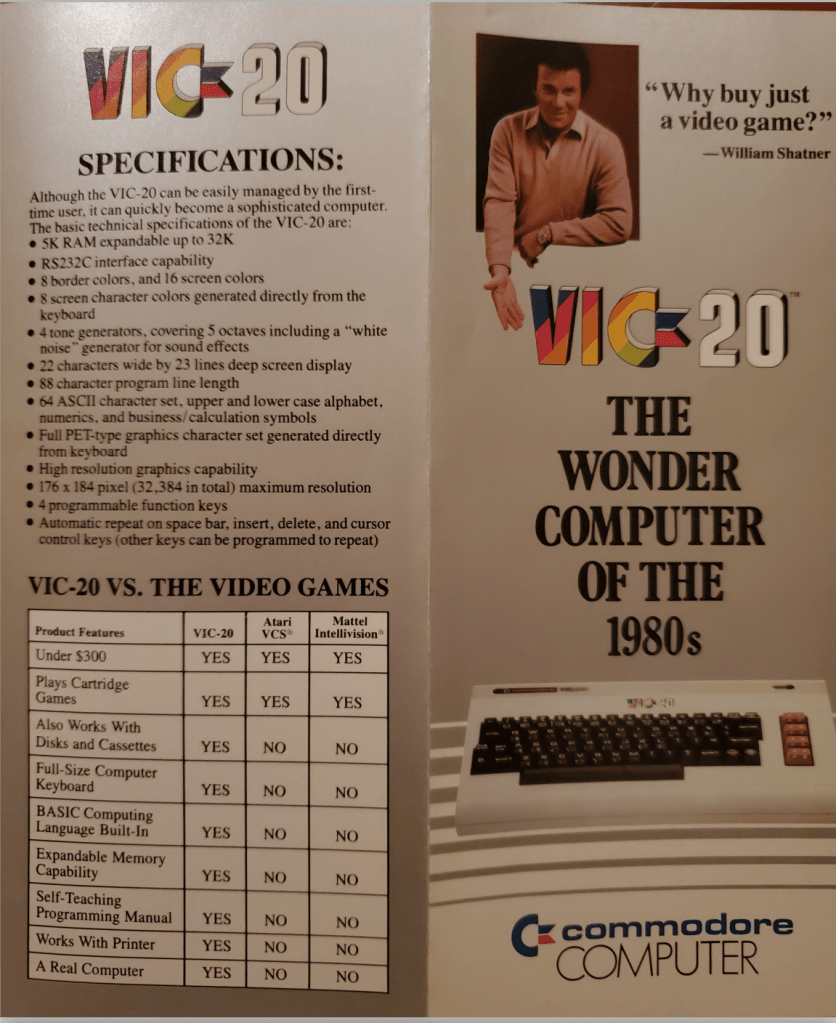
In 1981, my parents bought a VIC 20 for our family, and that is how my love of programming began. I loved that computer. I hated that it would reside in my older brother’s room. Nevertheless, I dedicated hours typing in code for games published in magazines, deciphering how the code worked and saving programs on cassette tapes.
I couldn’t resist the temptation of the department store’s display computers, where I’d often write a simple program:

Of course, I enjoyed playing games as well. We had cartridges for Space Invaders, Radar Rat Race, and others, which I mastered over time. However, what truly fascinated me was programming itself.
I remember attending an event for high achievers in the University of Waterloo Math Contests. There, they discussed a technique called “Egyptian multiplication”. It involved placing two numbers you wanted to multiply side by side. On the row below, you would halve the first number (rounding down) and double the second. This process continued until the left number reached 1. Rows with an even number on the left were then crossed out (they said the gods didn’t like even numbers), and the numbers on the right were summed to obtain the answer.
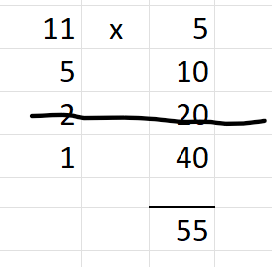
The speaker asked the audience if this method would always work. From near the back, I confidently shouted, “No”. When I got home, I wrote a computer program to test this out. I let it run all night, incrementing the numbers after each calculation. I can’t recall how high the program went, but needless to say, the Egyptians was proven right.
I’ve read about the high that kids experience from winning games like Fortnite, and how addicting it becomes. The rush I got from successfully writing Stock Ticker or Yahtzee in BASIC was just as exhilarating and addictive. Knowing that I could create something on a computer that nobody else around me could was amazing. I quickly realized that this was what I wanted to do.
 35 years in IT consulting
Leave a comment